
What Is Compression Set in Rubber and Why Does It Matter?
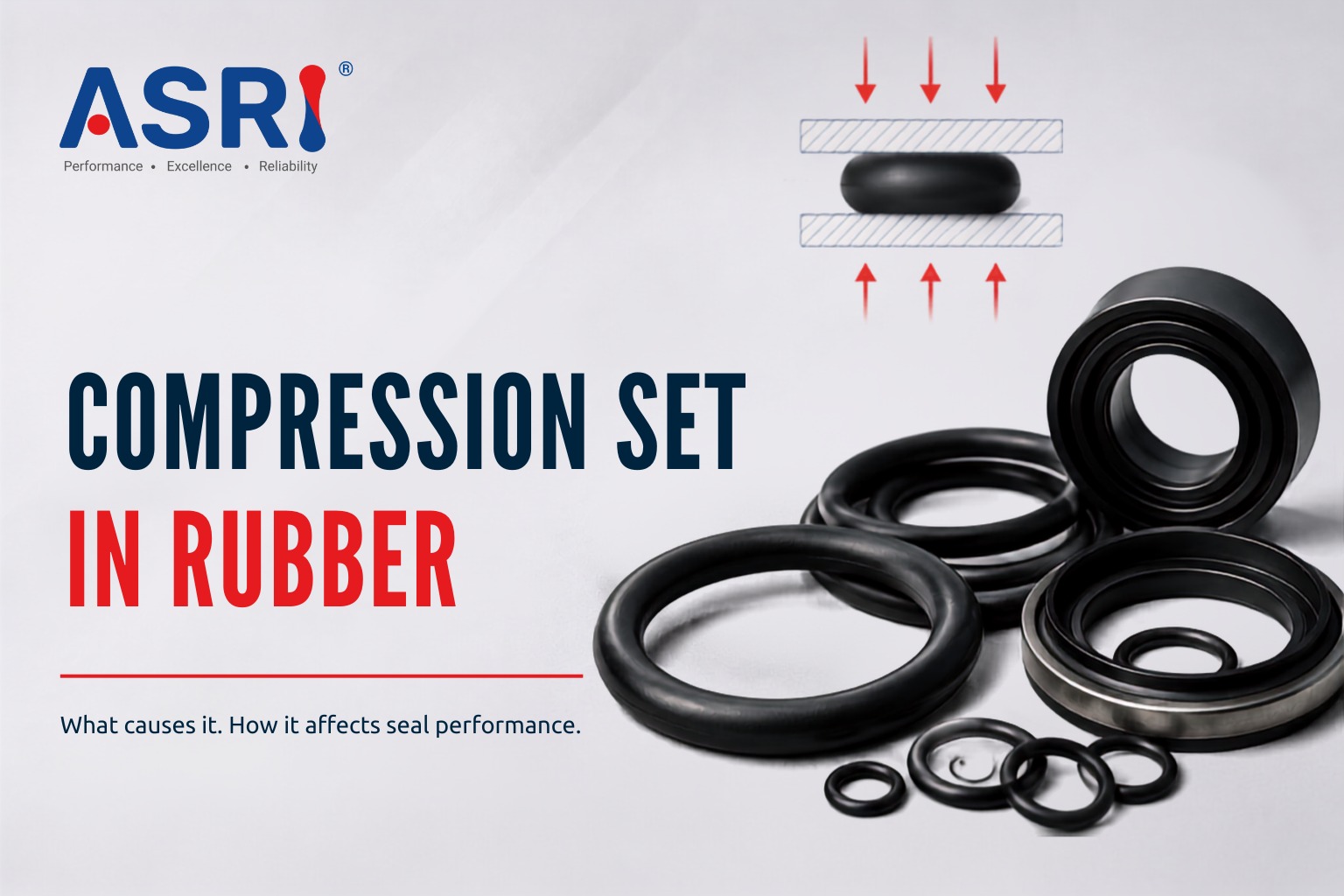
Compression set in rubber is the amount of permanent deformation left after a rubber component has been compressed and allowed to recover. A high compression set means the rubber does not return close to its original shape. In seals, this can reduce sealing pressure and increase the risk of leakage.
Introduction
Compression set in rubber is the amount of permanent deformation left after a rubber component has been compressed and allowed to recover. A high compression set means the rubber does not return close to its original shape. In seals, this can reduce sealing pressure and increase the risk of leakage.
What Is Compression Set in Rubber?
Rubber is expected to deform under pressure and recover when that pressure is removed.
Compression set measures how much of that deformation remains permanent.
Consider an O-ring compressed inside a groove. The O-ring pushes against the surrounding surfaces and creates the force required to maintain a seal. If the rubber gradually loses its ability to recover, that sealing force can decrease.
The component may still look acceptable when inspected, but it may no longer be applying enough pressure to prevent leakage.
Why Does Compression Set Matter?
Compression set is especially important in components that remain compressed for long periods, including:
- O-rings
- Gaskets
- Rubber-to-metal bonded seals
- Valve seals
- Anti-vibration mountings
- Industrial sealing components
A high compression set may result in:
- Reduced sealing force
- Leakage
- Permanent deformation
- Poor recovery after loading
- Shorter component life
- More frequent replacement
This is why compression set should be considered during material selection, not only after a component fails.
What Causes High Compression Set?
Several factors can affect the recovery of a rubber component.
1. Incorrect elastomer selection
Different elastomers respond differently to heat, pressure, oils, chemicals and prolonged compression.
A material that works well at room temperature may not provide the same recovery at a higher operating temperature.
2. Excessive temperature
Heat can accelerate rubber ageing and affect the material’s elastic properties.
When a component remains compressed at an elevated temperature, permanent deformation may develop faster.
3. Excessive compression
More compression does not always create a better seal.
If the component is compressed beyond the suitable range, it may experience unnecessary stress, deformation and wear.
4. Incorrect compound formulation
The polymer, fillers, curing system and additives all influence how a rubber compound behaves under sustained loading.
Two components made from the same general elastomer family can therefore have different compression set results.
5. Poor curing control
Curing affects the internal structure and final properties of a rubber component.
Incorrect curing time or temperature may result in a component that does not achieve the required level of strength, elasticity or recovery.
How Is Rubber Compression Set Tested?
Compression set is commonly evaluated by compressing a rubber test specimen under defined conditions.
The specimen is held at a specified compression, temperature and time. It is then released and allowed to recover before its remaining deformation is measured.
A lower result generally indicates better recovery under the tested conditions.
However, the test result should always be considered together with the actual application. Temperature, chemical contact, pressure cycles and service duration can all influence real-world performance.
How Can Compression Set Be Reduced?
Engineers should consider the complete operating environment before selecting a rubber compound.
Important factors include:
- Operating temperature
- Duration of compression
- Chemical or oil exposure
- Groove dimensions
- Required hardness
- Pressure conditions
- Expected service life
- Static or dynamic movement
Correct groove design is also important. The groove must provide enough compression to create a seal without placing excessive strain on the rubber.
Material selection, compound formulation, curing and dimensional control must work together.
What Are the Signs of Compression Set Failure?
Possible signs include:
- Flattened seals
- Leakage after long service
- Loss of contact between sealing surfaces
- A seal that does not return to its original shape
- Reduced vibration isolation
- Frequent replacement of the same component
These signs do not always mean compression set is the only cause. Surface damage, chemical attack, extrusion and incorrect installation may also contribute to failure.
The ASRI Approach
At ASRI, rubber components are developed around the conditions in which they must operate.
The process considers material compatibility, temperature, compression, movement and expected service life before the component enters production.
Because reliable sealing depends on more than selecting a rubber grade. It depends on selecting and processing the right compound for the complete application.
Frequently Asked Questions
What does compression set mean in rubber?
Compression set is the permanent deformation that remains after rubber has been compressed and allowed to recover.
Is a lower compression set better?
A lower compression set generally indicates that the rubber recovered more effectively under the tested conditions. The required result still depends on the application.
Can high compression set cause seal leakage?
Yes. If a seal loses its ability to recover, it may apply less pressure against the sealing surfaces and allow a leak path to form.
Does rubber hardness affect compression set?
Hardness and compression set are different properties. A harder rubber is not automatically more resistant to compression set. Compound formulation and operating conditions also matter.
How can the right rubber compound be selected?
The selection should consider temperature, fluids, pressure, movement, compression, service duration and applicable performance requirements.
Need Support With a Sealing Application?
ASRI designs and manufactures O-rings, seals, rubber-to-metal bonded parts and custom-moulded rubber components for demanding industrial applications.
Speak to ASRI about your operating conditions, material requirements and performance expectations.